In the film, “A Nightmare on Elm Street 2: Freddy’s Revenge”, directed by Jack Sholder, there are many connections that can be made between the film and Harry M. Benshoff’s article “The Monster and the Homosexual”. Throughout the film, horror is depicted through homoerotic subtext. Sholder mentions how a 1984 study categorized the fear of homosexuality into three categories. “(1) homosexuality as a threat to the individual – that someone you know (or you yourself) might be homosexual; (2) homosexuality as a threat to others – homosexuals have been frequently linked in the media to child molestation, rape, and violence; (3) homosexuality as a threat to the community and other components of culture – homosexuals supposedly represent the destruction of the procreate nuclear family, traditional gender roles, and (to use a buzz phrase) “family values””. Comparing homosexuality to a “monstrous condition”.

New Line Cinema
https://headhuntershorrorhouse.fandom.com/wiki/Jesse_Walsh
Jesse Walsh has had terrifying nightmares every night since moving into 1428 Elm Street. Every time he falls asleep he is visited by Freddy Krueger. Soon after the nightmares begin, Jesse starts to have unexplainable violent impulses. With the help from his “girlfriend” Lisa, Jesse learns that Freddy wants to use his body as a host to go on another killing spree.
New Line Cinema
https://gifer.com/en/gifs/a-nightmare-on-elm-street
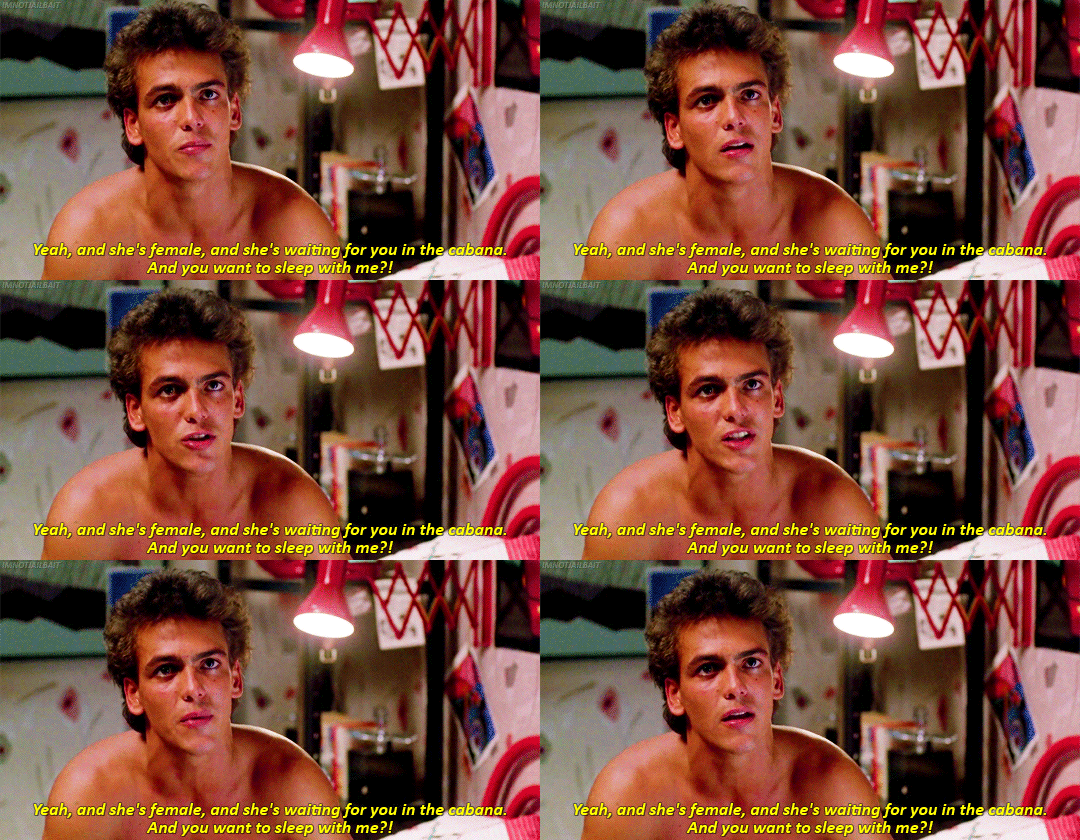
While most audience members associate their fear with Freddy Krueger. Others associated their fear with the homoerotic subtext. Throughout the film, there are numerous examples of homoerotic subtext. The most obvious one being when Jesse awakes from a nightmare and decides to go to a gay bar. While ordering a beer, coach Schneider catches him and makes him run laps around the gym as punishment. Another example of homoerotic subtext is the complication relationship between Jesse and Ron. Jesse and Ron at first despise each other. It wasn’t until they both started to receive punishment from coach Schneider that they began to bond and develop a relationship. The homoerotic subtext between Jesse and Ron is unclear, up until the scene when Lisa and Jesse attempt to have sex. Jesse is unable to finish because he freaks out. He leaves Lisa’s party and heads directly over to Ron’s house. The audience is then left to assume that Jesse is more comfortable around Ron than Lisa. All of this causes the audience to speculate that Jesse is secretly gay. Which in turn causes fear and horror. “The concepts “monster” and “homosexual” share many of the same semantic charges and arouse many of the same fears”.
Article Summary:
In the article, “The Monster and the Homosexual”, by Harry M. Benshoff, he talks about the fear of homosexuality. He mentions how a 1984 study categorized the fear of homosexuality into three categories. “(1) homosexuality as a threat to the individual – that someone you know (or you yourself) might be homosexual; (2) homosexuality as a threat to others – homosexuals have been frequently linked in the media to child molestation, rape, and violence; (3) homosexuality as a threat to the community and other components of culture – homosexuals supposedly represent the destruction of the procreate nuclear family, traditional gender roles, and (to use a buzz phrase) “family values””. Benshoof also mentions how the AIDS crisis fueled the public’s fear of homosexuals. Comparing homosexuals to vampires, saying how “with a single mingling of blood, can infect a pure and innocent victim, transforming him or her into the living dead”. This comparison led to homosexuality being viewed by the public as monstrous.
 Brendan's CMS Blog